China Communications Shanghai Navigation Bureau's intelligent shallow draft paving vessel construction project begins.
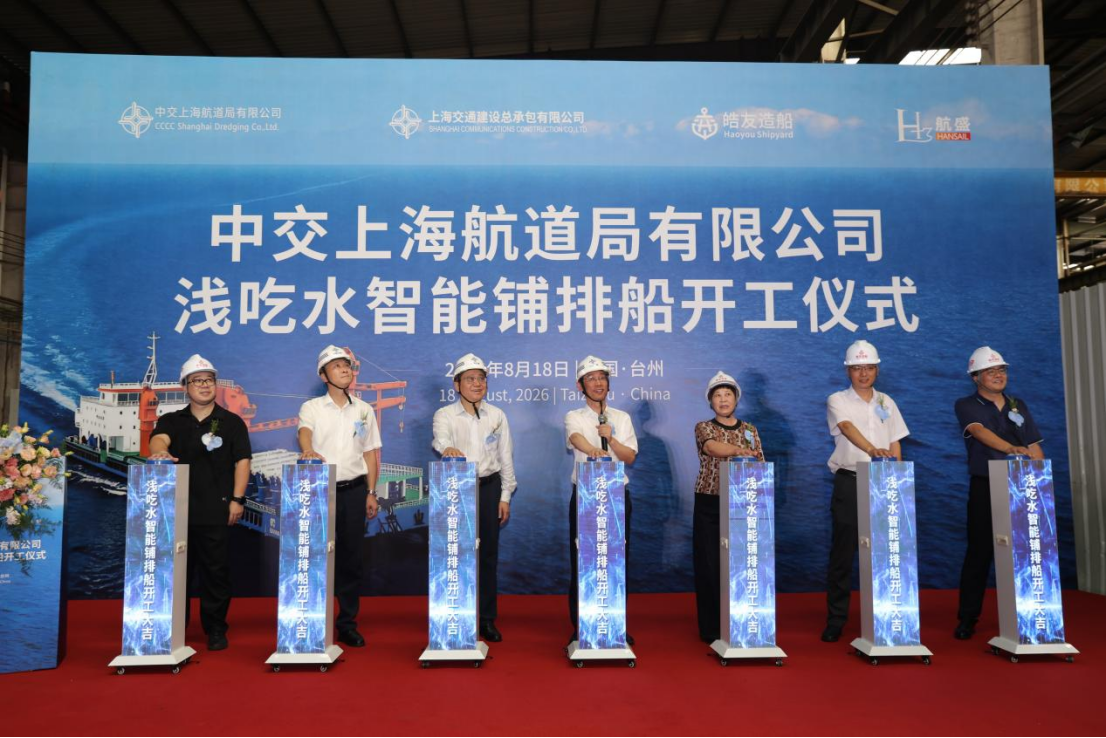
On August 18, the construction project of the shallow-draft intelligent paving ship by CCCC Shanghai Dredging Co., Ltd. officially commenced in Taizhou, Zhejiang. From transforming the "Hangfang Barge 602" in 1997 to pioneer ship-based paving operations, to now owning the largest and most advanced paving fleet in China, CCCC Shanghai Dredging has paved a path of progress from nothing to excellence, continuously leading the industry's development.
Starting from scratch to fill industry gaps
Paving ships are specialized engineering vessels used for cofferdam land reclamation, geotextile laying, and sandbag filling operations. In 1997, CCCC Shanghai Dredging achieved a historic breakthrough by transforming the "Hangfang Barge 602" into China's first paving ship, pioneering the sandbag filling process and achieving a leap from manual paving to ship-based paving operations, focusing on shallow water construction and riverbed leveling. The success of this technological transformation led the company to quickly undertake the transformation project of "Hangfang Barge 603," forming the early paving fleet and filling a domestic gap.
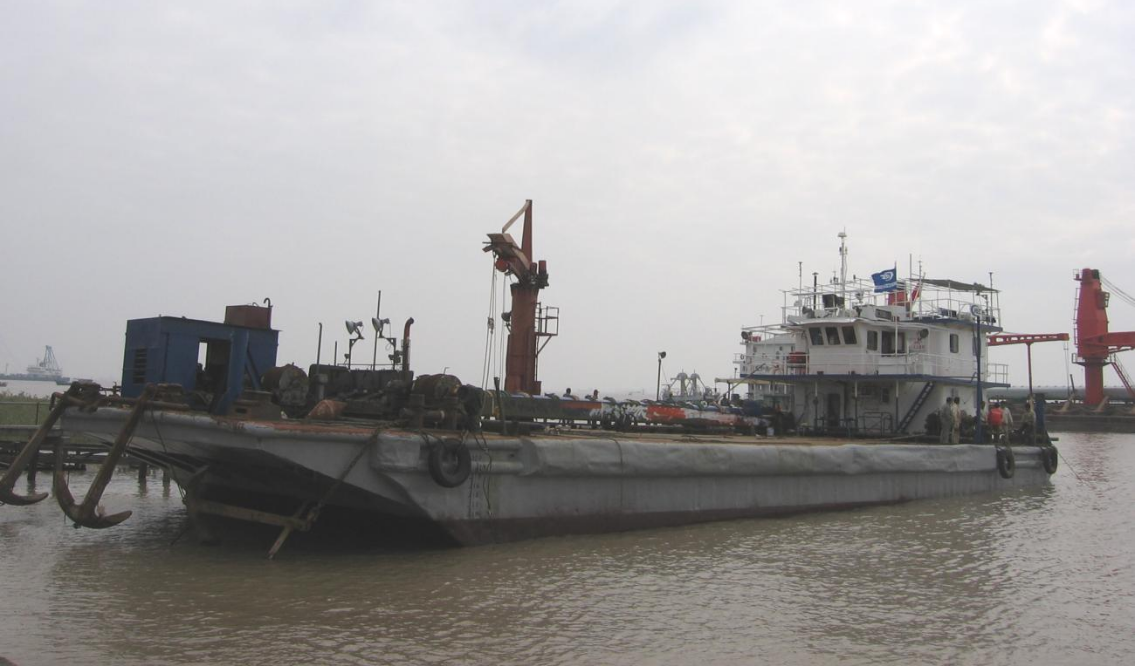
In 1998, to support the unprecedented Yangtze River Estuary Deepwater Channel Regulation Project, the "Transportation Construction No. 5" was transformed. As a representative of the second-generation paving ships, it was equipped for the first time with a crane and paving flip boards, enabling the lifting of prefabricated concrete blocks and giving rise to the new "interlocking block paving" construction method. During the initial construction of the Shanghai Yangshan Deepwater Port, paving ships were assigned a new mission of "prefabricated sandbag dumping." To save costs and efficiently coordinate port land formation, the "Transportation Construction No. 3" was specially modified on the second-generation basis with larger flip boards, giving birth to the "largest board in Asia." With its keen foresight and innovation, CCCC Shanghai Dredging reached the pinnacle of the paving field.
Entering the 21st century, the "Transportation Construction No. 2," as the pioneering work of the third-generation paving ships, redefined the scope and technical standards of paving ships, completely changing the costly and time-consuming construction state of the embankment industry at the time. It became an indispensable key carrier in the land reclamation process. Subsequently, the fourth-generation paving ship was completed, using a truss system for the first time and upgrading to an information-based variable frequency system, significantly improving single-ship construction efficiency. Leveraging the automation equipment advantages of two heavy-duty paving ships, the company successively undertook national key projects such as Tianjin Lingang, Caofeidian, and Xiamen Airport construction, maintaining its core paving competitiveness as the leader in Asia.
The "Twin Stars of Transportation Construction" conquer deepwater challenges
The successive launches of "Transportation Construction No. 9" and "Transportation Construction No. 10" marked a qualitative leap for CCCC Shanghai Dredging's paving fleet.
The "Twin Stars of Transportation Construction" focused on a comprehensive leap in construction capabilities, with paving widths increasing from the 40-meter level to the 60-meter level, covering a larger single construction area and effectively reducing the number of overlaps and errors. As the industry's most multifunctional composite paving ships, the two vessels boast ultra-high mechanical equipment compatibility. In addition to upgrading traditional functions such as geotextile laying, concrete interlocking block paving, and sandbag filling, they integrate new functions like caisson stone dumping and waterborne drainage board installation. With unique retrofitting expandability, they are paving "transformers" fully adaptable to various operational environments. Additionally, the ships innovatively added auxiliary and lateral push emergency avoidance functions, significantly enhancing wind and wave resistance levels and vessel safety.
In terms of intelligence, the ships achieved a leap from single-machine automation to full-process coordination for the first time. Through digital applications, they easily realized functions such as automatic sand filling, intelligent lifting, automatic paving, visualized operations, and one-click ship relocation, effectively reducing the number of necessary labor personnel. Daily production capacity and annual construction capabilities tripled, driving paving operations from labor-intensive to intelligent technology innovation. More importantly, the "Twin Stars of Transportation Construction" completely solved the challenges of deepwater paving, withstanding tests in national key projects such as the Zhangjinggao Yangtze River Bridge and the Yangtze River Estuary Channel Regulation, where water depths reached nearly 30 meters—far exceeding the 15-meter limit of conventional embankment projects. Traditional paving equipment could not match this. With its strong environmental adaptability, CCCC Shanghai Dredging's paving fleet extended operations from nearshore shallow waters to deepwater offshore areas.
In terms of green and environmental protection, the ships adopted a full-electric system for the first time, fully upgraded to multi-drive variable frequency systems across the entire vessel, reducing vibration and noise, and achieving comprehensive energy savings and emission reductions. The onboard generator sets strictly controlled emissions, making the entire construction process greener, more environmentally friendly, and lower in carbon emissions. These ships became the world's only paving vessels awarded the green ship additional mark.
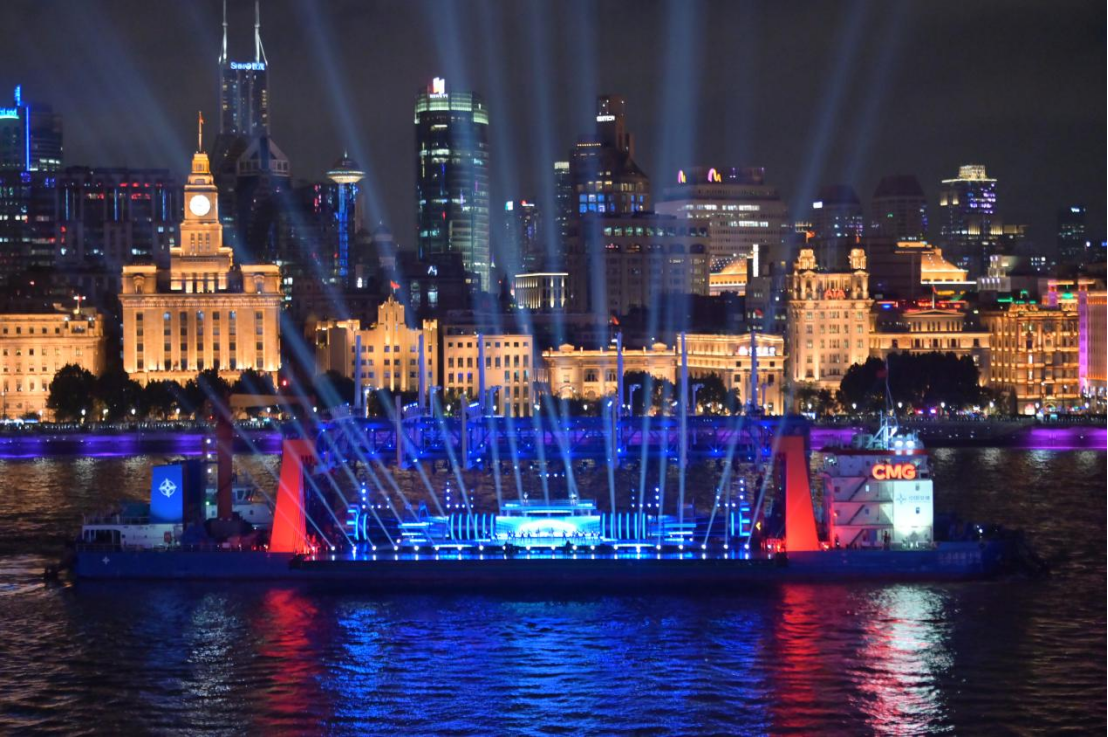
In 2025, CCCC Shanghai Dredging and the China Classification Society jointly compiled the "Intelligent Ship Specification" (2025), incorporating "intelligent paving" into the ship specification system for the first time. This specification clarified core requirements such as intelligent paving functions, operation and control, equipment health management, and operational efficiency management, filling the gap in domestic intelligent grading standards for paving ships. The outstanding performance of the "Twin Stars of Transportation Construction" provided critical practical support for the formulation of this standard, propelling CCCC Shanghai Dredging from a standard implementer to a standard setter. In the same year, "Transportation Construction No. 10" was transformed into the "Ship of Innovation" and appeared on the stage of the "CMG Science and Innovation Gala," bringing paving ships from engineering sites to the national audience's view on CCTV.
Launching an offensive for full water area coverage
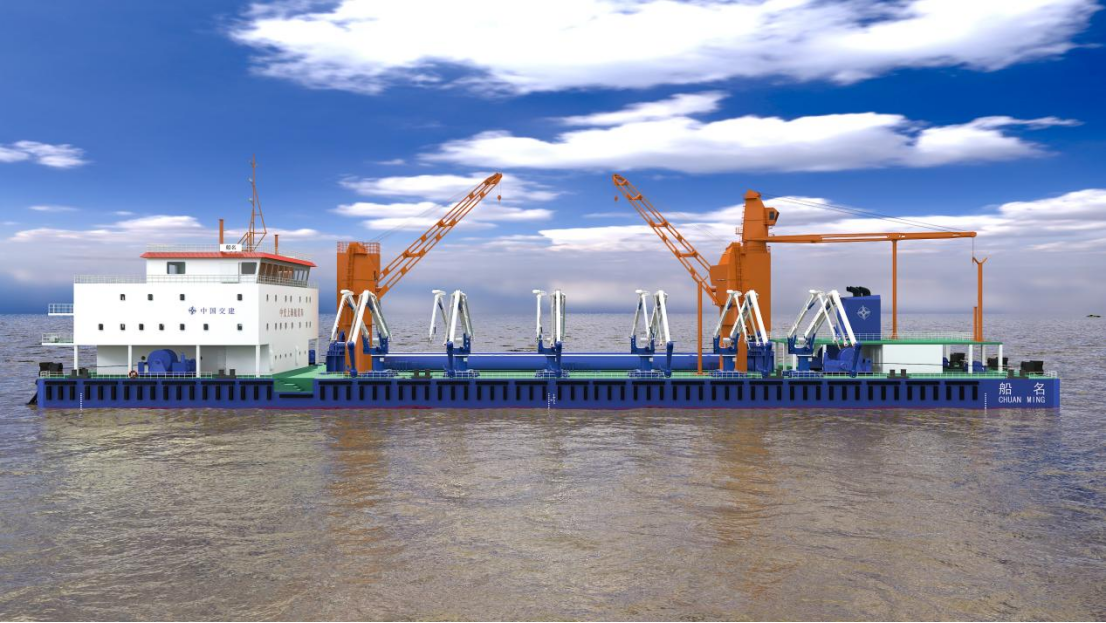
The "Twin Stars of Transportation Construction" overcame the challenges of deepwater paving, but when construction areas shifted to shallow water key projects such as the Hengsha Shoal and the South Channel, draft depth became a new "threshold." The shallow-draft intelligent paving ship was developed to resolve the contradiction of "requiring shallow draft while maintaining high performance."
From conquering deepwater to focusing on shallow water, this "deep first, shallow later" strategic loop reflects CCCC Shanghai Dredging's persistent pursuit of the goal of "full water area coverage." While the draft of the new ships was significantly reduced during design, their construction capabilities not only remained intact but improved—filling efficiency was further enhanced, and lifting capacity was significantly increased, achieving full operational coverage from shallow shoals to deep waters. The team integrated cutting-edge technologies such as a visualized operation precision system and a "digital sentinel" intelligent prevention and control system on the ships and conducted exploratory research on AI intelligent filling, aiming to achieve automatic path planning and intelligent control of robotic arms. Leveraging comprehensive energy-saving measures such as variable frequency drives and permanent magnet motors, the new ships achieved increased efficiency while reducing energy consumption. From single-function paving to multifunctional collaboration, from starting in shallow waters to conquering deep waters and then focusing on shallow waters, the evolution of CCCC Shanghai Dredging's paving ships is a story of continuously expanding operational boundaries and leading industry development through innovation.
From protecting shores and building embankments to constructing cofferdams and embankments, from navigating rivers to venturing into international waters, generation after generation of meritorious vessels have carried forward the spirit of craftsmanship, leaving magnificent footprints in one epic project after another. CCCC Shanghai Dredging has always maintained the largest and most advanced paving fleet in China. Behind the iterations of several generations of ship models lies the dedication of maritime professionals who believe that "to do a good job, one must first sharpen one's tools." It also reflects a nation's steadfast determination to "firmly grasp key technologies in the field of hydraulic engineering equipment." From the banks of the Huangpu River to the shores of the East China Sea, the trajectory of CCCC Shanghai Dredging always extends toward greater depth, distance, and intelligence.
-
October 08 International Shipping Trends5877
-
聚焦四个环节 天津海事局全力保障国庆假期涉水施工安全稳定3745
-
Tianjin New Port Maritime Bureau ensures safe loading and convenient shipping of large sintering machine equipment.4385
-
The Yangtze River Zhenjiang section has fully implemented the "Six All" digital closed-loop management system for operations involving hazardous chemical vessels.3505
-
Tianjin North Maritime Bureau Escorts "China's Intelligent Manufacturing" to Sail Overseas4473