Ningbo's "Grid-based + Sentinel Ships" Mechanism Actively Responds to Typhoon "White Dolphin"
"Traffic Control Center, Sentinel Ship of the Second Grid in Donghuoshan reports: The current grid has northeast winds of 9-10 levels, wave heights of 3-4 meters, visibility of 2 nautical miles, and normal anchoring distances between ships within the grid, with no dragging anchor or other abnormal situations." This is the rolling update information within the sentinel group established by the Ningbo Vessel Traffic Management Center after the landing of the super typhoon "White Dolphin."
This year's 13th typhoon, "White Dolphin," made landfall along the coast of Kanmen Street, Yuhuan City, Taizhou, Zhejiang Province. At the time of landfall, the maximum wind force near the center reached level 14, bringing multiple impacts of strong winds, huge waves, and storm surges to the coastal waters of Ningbo. After the typhoon made landfall, the wind force in concentrated anchorage areas such as the west side of Xiangshan Harbor and the Donghuoshan waters generally increased to around level 10, with wave heights exceeding 4 meters.
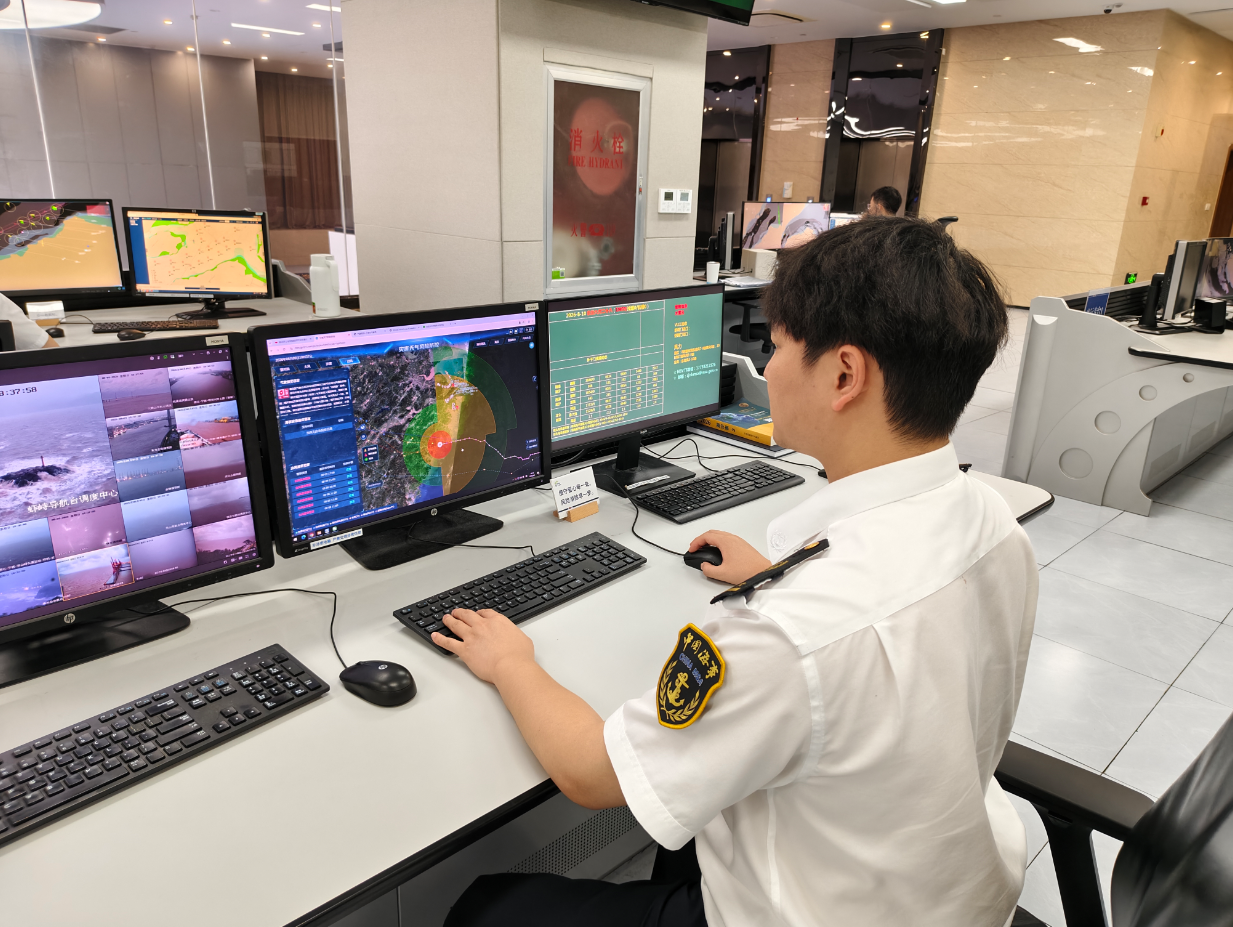
In the face of the severe challenges brought by this year's super typhoon "White Dolphin," the Ningbo Maritime Department, relying on the "Disaster Weather Risk Prevention and Control" scenario, innovatively operated a "Grid-based + Sentinel Ship" joint prevention and control mechanism. They preemptively divided anchored ships into 50 grids based on water area characteristics and ship distribution, achieving group prevention and control of sheltered ships within the grids through 45 sentinel ships and 24 sentinel stations.
After the typhoon made landfall, each sentinel ship adhered to reporting grid conditions to the Traffic Control Center every hour, providing feedback on key information such as wind force and direction, ship anchoring status, and abnormal dynamics within the grid. This assisted the Traffic Control Center in efficiently collecting on-site information and handling emergency situations. Meanwhile, the Vessel Traffic Management Center maintained 24-hour continuous duty, broadcasting typhoon safety notices via VHF high-frequency rolling broadcasts. Through high-frequency reminders and two-way interaction with sentinel ship reports, they established an information channel from shore-based supervision to on-site maritime operations.
Currently, typhoon "White Dolphin" is gradually weakening, but coastal swells and residual strong winds continue to have an impact. The Ningbo Maritime Bureau will continue to rely on the "Grid-based + Sentinel Ship" mechanism, guiding each sentinel ship to transition into port evacuation guidance sentinels, directing anchored ships to lift anchor in an orderly manner and leave the port in batches. As of 8:00 PM on the 9th, sentinel ships have reported dynamics a total of 621 times. The Traffic Control Center, through cross-verification of AIS, radar, and sentinel ship descriptions, has identified and successfully handled 8 cases of dragging anchor risks, effectively ensuring the safe sheltering of 817 anchored ships in the Ningbo jurisdiction during the typhoon.
-
October 08 International Shipping Trends5877
-
聚焦四个环节 天津海事局全力保障国庆假期涉水施工安全稳定3745
-
Tianjin New Port Maritime Bureau ensures safe loading and convenient shipping of large sintering machine equipment.4385
-
The Yangtze River Zhenjiang section has fully implemented the "Six All" digital closed-loop management system for operations involving hazardous chemical vessels.3505
-
Tianjin North Maritime Bureau Escorts "China's Intelligent Manufacturing" to Sail Overseas4473